 PickGuide
SIRUI Saturn V2 Review: 1.6x Full-Frame Anamorphic at $599
Anamorphic lenses used to be a rental-house decision. A set cost more than the camera, weighed enough to need a proper rig, and existed to serve one aspect ratio: wide cinema. The SIRUI Saturn V2 is the current best seller in SIRUI's store because it attacks both of those assumptions. It is a full-frame 1.6x anamorphic at $599 per focal length, weighs around 1.1 lb, and - the part that is genuinely new - the optical block rotates, so the oval bokeh and horizontal flares stay horizontal even when the camera is turned on its side for vertical video. That makes it the first anamorphic designed as much for a phone-shaped feed as for a cinema screen. It comes in 35mm, 50mm and 75mm, in E, L, RF and Z mounts, with a 3-year defect warranty.
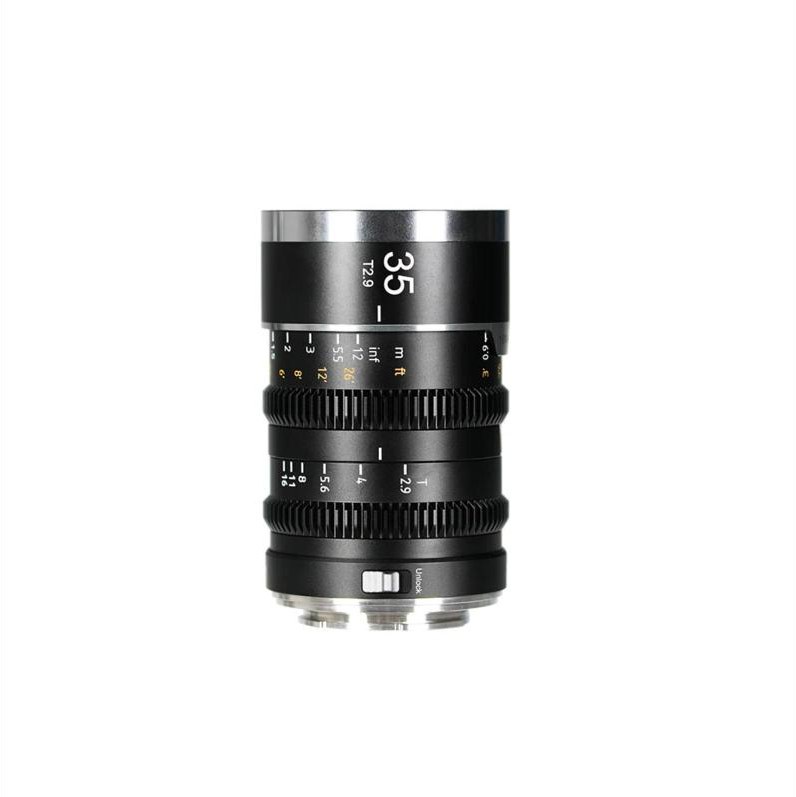
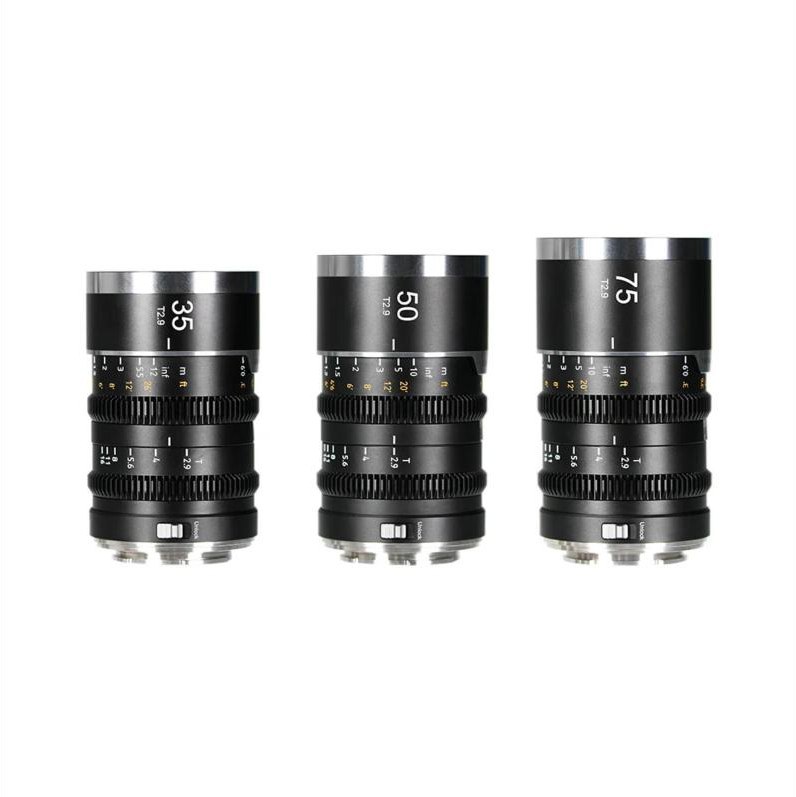
SIRUI Saturn V2 Series 35/50/75mm T2.9 1.6x Full-Frame Anamorphic Lens. SKU ST2-35E (35mm E mount). Squeeze ratio: 1.6x constant. Coverage: full frame, 45mm image circle. Aperture: stepless T2.9 to T16. Focus: manual only, 120 degree throw, identical gear position across all three focal lengths. Minimum focus distance: 0.9m (3ft) on all three. Filter thread: M62 x 0.75 on all three. Mounts: Sony E, Leica L, Canon RF, Nikon Z. Optical construction: 35mm - 18 elements in 13 groups; 50mm - 17 in 12; 75mm - 15 in 11; each including 5 cylindrical elements and 1 aspherical element. Aperture blades: 10 on the 35mm and 50mm, 14 on the 75mm. Weight excluding caps: 35mm 461 to 487.5g, 50mm 507 to 534g, 75mm 511 to 537.5g depending on mount, so roughly 1.0 to 1.2 lb. Horizontal and vertical switching: an unlock button rotates the optical block so de-squeeze, flares and oval bokeh stay horizontal in either camera orientation; SIRUI quotes a 0.9:1 vertical widescreen output from a 9:16 sensor crop and near 1.07:1 from 2:3. Full-frame equivalents stated by SIRUI: 35mm behaves like 22mm, 50mm like 31mm, 75mm like 47mm. Flare option: Neutral. Price: $599 per lens, $1,699 for the three-lens set. Warranty: free replacement within 3 years for non-human product defects. Box: lens, pouch, front and rear caps, cleaning cloth, warranty card.
Pros
- A full-frame anamorphic at $599 is roughly an order of magnitude below where this category used to start
- The rotating optical block is a real innovation - horizontal flares and oval bokeh in vertical video, which no conventional anamorphic can do
- About 1.1 lb means it works handheld, on a gimbal or on a drone rather than demanding a shoulder rig
- Matched across the set: same M62 filter thread, same gear position, same 120 degree focus throw, so swapping lenses does not mean re-rigging
- Four mounts covered - Sony E, Leica L, Canon RF and Nikon Z - so it is not a one-system purchase
- 3-year free replacement warranty for non-human defects, which is longer than most lens brands offer
Cons
- Manual focus only, with no electronic contacts - no autofocus, no in-camera stabilisation data, no EXIF
- T2.9 is slow for a full-frame cine lens; a T1.5 spherical prime gathers roughly four times the light
- 0.9m minimum focus distance is restrictive - no close-ups without a diopter
- SIRUI's own store carries a 3.7 out of 5 Trustpilot rating from 115 reviews, below our usual 4.0 threshold, and this specific product had only 2 reviews at the time of writing
- Free shipping outside the US starts at $699, so a single $599 lens to the EU, UK, Canada or Australia pays carriage
- Returns are accepted only in the US and EU, and the buyer pays round-trip shipping plus possible depreciation charges
Who It's For
Good For
- Creators producing vertical social video who want a look the algorithm feed is not already full of
- Solo filmmakers and small crews who need a cine aesthetic without a cine rig
- Anyone who has wanted to try anamorphic but could not justify renting a set
- Owners of full-frame mirrorless bodies across Sony, Canon, Nikon or L-mount
Skip If
- You need autofocus - this is manual focus only, with no electronic communication with the body
- You shoot in low light, where T2.9 and no stabilisation data will hurt
- You need close focus; 0.9m rules out product and macro work without accessories
- You want a safe, heavily-reviewed purchase - this product had two customer reviews when we looked
How It Compares: SIRUI Saturn V2 1.6x Anamorphic Lens vs SIRUI Venus 35/50/75/100/135/150mm T2.9 1.6x
| Spec | SIRUI Saturn V2 1.6x Anamorphic Lens | SIRUI Venus 35/50/75/100/135/150mm T2.9 1.6x |
|---|---|---|
| Price per lens | $599.00 | $499.00 (list $1,499) |
| Squeeze ratio | 1.6x | 1.6x |
| Aperture | T2.9 | T2.9 |
| Coverage | Full frame | Full frame |
| Focal lengths | 35, 50, 75mm | 35, 50, 75, 100, 135, 150mm |
| Vertical shooting | Rotating optical block | Not offered |
This is the comparison most buyers should actually make, because it is between two SIRUI lines with the same squeeze ratio and the same T2.9 aperture. Venus is the established range: six focal lengths out to 150mm, and currently $499 per lens against a $1,499 list. Saturn V2 costs $100 more per lens, stops at 75mm, and buys you one thing Venus does not have - the rotating optical block that keeps flares and bokeh horizontal when you shoot vertically. If your output is horizontal and you want reach or want to spend less, Venus is the better value. If vertical video is part of what you deliver, Saturn V2 is the only one of the two that does it properly.
See SIRUI Venus 35/50/75/100/135/150mm T2.9 1.6x →
Verified Ratings
Key Specs
| Squeeze ratio | 1.6x constant |
| Coverage | Full frame, 45mm image circle |
| Aperture | T2.9 to T16, stepless |
| Focal lengths | 35mm, 50mm, 75mm |
| Focus | Manual, 120 degree throw |
| Minimum focus | 0.9m (3ft) |
| Filter thread | M62 x 0.75 |
| Mounts | Sony E, Leica L, Canon RF, Nikon Z |
| Weight | About 1.0 to 1.2 lb depending on focal length and mount |
| Vertical shooting | Rotating optical block |
| Warranty | 3 years, non-human defects |
| Price | $599 per lens, $1,699 for three |
In The Box
- 1 x Saturn V2 lens
- 1 x Lens pouch
- Front and rear lens caps
- 1 x Lens cleaning cloth
- 1 x Warranty card
Frequently Asked Questions
What does the rotating optical block actually solve?
On a conventional anamorphic, turning the camera to portrait turns the optics with it, so the horizontal lens flares become vertical streaks and the oval bokeh stands on end. The result looks wrong rather than cinematic. The Saturn V2 has an unlock button that rotates the optical block independently of the mount, so you can shoot vertically while the flares and bokeh stay horizontal. SIRUI quotes a 0.9:1 output from a 9:16 crop and close to 1.07:1 from the full 2:3 sensor. For anyone producing for vertical feeds this is the whole point of the lens.
Is 1.6x squeeze better or worse than the usual 1.33x and 2x?
It sits between them deliberately. A 1.33x squeeze gives a mild anamorphic character and widens the frame modestly; a 2x squeeze gives the strongest classic look but needs a lot of sensor width and the lenses are large. At 1.6x you get noticeably more oval bokeh and horizontal flare than 1.33x while keeping the lens small enough to hold. It is also constant across all three focal lengths, so de-squeezing in post is one setting for the whole set rather than per lens.
Can I use these for stills as well as video?
Technically yes, practically with caveats. They are cine-style lenses: manual focus, declicked stepless aperture, no electronic contacts. That means no autofocus, no aperture control from the camera body and no EXIF data recorded. Every frame needs de-squeezing in software to look correct, which is routine in a video editor and more awkward in a stills workflow. If stills are the main use, a spherical prime will serve better; if video is the main use and stills are occasional, it is workable.
Which focal length should I start with?
SIRUI gives horizontal field of view equivalents that make this easier: the 35mm behaves like a 22mm, the 50mm like a 31mm and the 75mm like a 47mm, because the anamorphic stretch widens the horizontal view. For general and interview work the 50mm is the natural first buy. The 35mm is the one for interiors, vlogging at arm's length and anything cramped. The 75mm is the portrait and narrative lens. The three-lens set at $1,699 saves $98 against buying them separately, which is a modest discount - there is no strong pressure to buy all three at once.
What are the shipping, warranty and return terms?
SIRUI ships worldwide from its own store, using FedEx, DHL and UPS, with 0 to 1 business day processing and typically 3 to 7 business days in transit. Free shipping on lenses applies from $299 in the US but only from $699 in the EU, UK, Canada, Australia, New Zealand and Asia, so a single $599 lens outside the US will be charged carriage. Colombia, Guatemala, Ecuador, Martinique, Chile and Peru are excluded from free shipping entirely. The warranty is free replacement within 3 years for non-human product defects. Returns for non-defective items are accepted only in the US and EU, within 30 days, with the customer paying round-trip shipping and possible depreciation, bank or other charges deducted from the refund. Damaged or lost packages must be reported within 21 days of delivery confirmation.
Verdict
The Saturn V2 is the most interesting lens in its price bracket and also the one that needs the clearest eyes. What SIRUI has built is genuinely novel: an anamorphic whose optical block rotates so the signature look survives vertical framing, which matters now that most video is watched on a phone. At $599 per focal length and around 1.1 lb, it puts a look that was a rental decision into the hands of someone shooting alone with a gimbal. The optical compromises are the honest ones for the price - T2.9 rather than T1.5, manual focus, 0.9m minimum - and none of them are hidden. The reservations are about the merchant rather than the glass. SIRUI's store sits at 3.7 out of 5 on Trustpilot across 115 reviews, below the 4.0 we normally require before recommending a seller, this particular lens had two reviews when we checked, and the return policy is restrictive: US and EU only, with the buyer paying shipping both ways and possible depreciation deductions. If you are in the US, the free shipping threshold of $299 and a reachable returns route make the risk manageable. Elsewhere, budget for carriage and understand that sending it back will be awkward. Buy it for what it does that nothing else at this price does, not because the purchase is low-risk.