 PickGuide
Piscifun Carbon X Review: 5.1oz Carbon Spinning Reel from $57.99
Reel weight is the specification anglers argue about least and feel most. Hold a rod for six hours and a couple of ounces at the reel seat stops being a number on a box. The Piscifun Carbon X is built around that single idea: an all-carbon fibre body, rotor and side plate bringing the size 1000 down to 5.1 ounces, which puts it among the lightest in its class. Underneath it carries 10+1 shielded stainless steel ball bearings, a stainless main shaft, a zinc alloy drive gear and a screw-in aluminium handle - components usually found a price bracket higher. It is Piscifun's current best seller, runs from size 500 to 4000, and starts at $57.99.
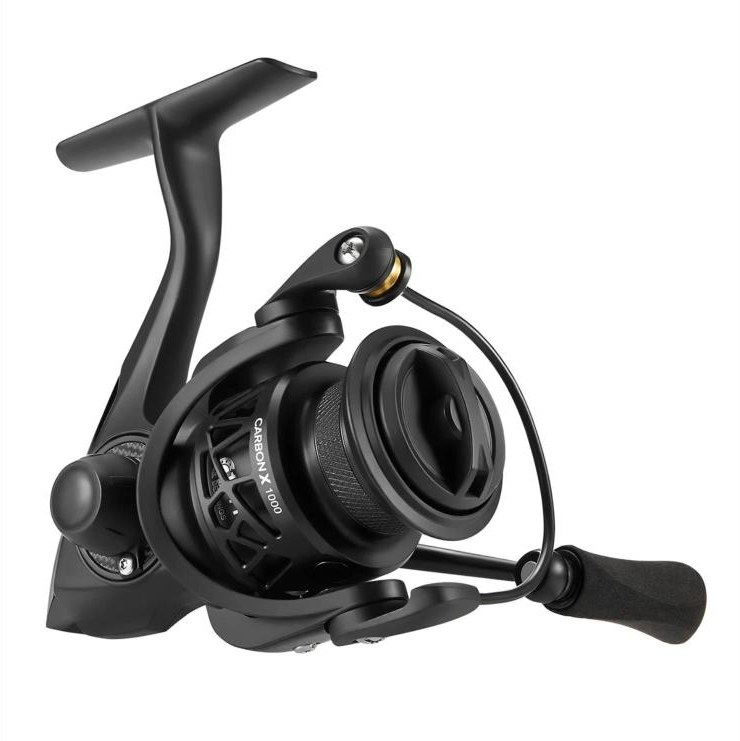
Piscifun Carbon X Ultralight Spinning Reel. Construction: all carbon fibre body, rotor and side plate. Weight: 5.1 oz, which Piscifun describes as among the lightest in its class. Bearings: 10+1 shielded stainless steel ball bearings for smoothness and corrosion resistance. Main shaft: reinforced anti-corrosion stainless steel. Drive gear: zinc alloy. Handle: direct drive screw-in aluminium with a high density EVA knob. Spool: hollow nest shaped. Drag: smooth positive click adjustment. Sizes: 500, 1000, 2000, 3000 and 4000, with folding handle options on 500 and 1000. Note: no anti-reverse switch on sizes 500 and 1000. Prices: from $57.99 for size 2000 up to $79.99 for size 4000, against list prices from $79.99 to $149.99. California Proposition 65 warning applies.
Pros
- 5.1 oz from genuine carbon construction, not a plastic body with carbon-look trim - fatigue over a long session is noticeably lower
- 10+1 shielded stainless bearings is a high count at this price and the shielding matters for corrosion resistance
- Stainless main shaft and zinc alloy drive gear are the components that usually fail first on budget reels
- Screw-in aluminium handle rather than a push-fit plastic one, which removes the handle wobble common at this price
- Five sizes from 500 to 4000, so one reel family covers ultralight trout through to inshore work
- Trustpilot 4.6 across 572 reviews is a strong record for a direct-to-consumer tackle brand
Cons
- No anti-reverse switch on sizes 500 and 1000, which some anglers specifically want for backreeling
- Carbon bodies flex more than aluminium under heavy drag pressure - this is a finesse reel, not a brute
- Zinc alloy gearing is good for the price but will not match machined brass or aluminium gears for longevity under hard use
- List prices up to $149.99 appear inflated against the real selling price, so judge it on the $57.99 to $79.99 range
- Carries a California Proposition 65 warning for lead exposure, which is worth knowing before purchase
Who It's For
Good For
- Anglers who fish long sessions where reel weight genuinely accumulates into wrist fatigue
- Finesse freshwater work - trout, panfish, light bass presentations - where the 500 to 2000 sizes shine
- Anyone upgrading from an entry-level reel who wants real component quality without crossing $100
- Travel and hike-in fishing, where the folding handle options on 500 and 1000 save pack space
Skip If
- You target large saltwater species where an aluminium-bodied reel's rigidity under heavy drag matters more than weight
- You rely on backreeling and want an anti-reverse switch on a small size reel
- You already own a quality reel in this class - the gain over a decent 6oz reel is real but incremental
How It Compares: Piscifun Carbon X Ultralight Spinning Reel vs RitFit M2 Series Modular Home Gym
| Spec | Piscifun Carbon X Ultralight Spinning Reel | RitFit M2 Series Modular Home Gym |
|---|---|---|
| Price | $57.99 to $79.99 | From $2,499.99 |
| Category | Fishing tackle | Home strength training |
| Space needed | A tackle bag | A dedicated room or garage bay |
| Assembly | None | Substantial |
| Trustpilot | 4.6 from 572 | 4.5 from 367 |
Both sit in Outdoor & Sports but answer completely different questions. The Carbon X is a low-risk upgrade you can justify on a whim; the RitFit M2 is a considered investment that changes a room in your house. Listed side by side mainly to show the range this category covers.
See RitFit M2 Series Modular Home Gym →
Verified Ratings
Key Specs
| Weight | 5.1 oz |
| Construction | Carbon fibre body, rotor and side plate |
| Bearings | 10+1 shielded stainless steel |
| Main shaft | Anti-corrosion stainless steel |
| Drive gear | Zinc alloy |
| Handle | Screw-in aluminium, EVA knob |
| Sizes | 500, 1000, 2000, 3000, 4000 |
| Anti-reverse switch | Not on sizes 500 and 1000 |
| Price range | $57.99 to $79.99 |
In The Box
- 1 x Piscifun Carbon X spinning reel in the selected size
- Reel bag
- Instruction and maintenance leaflet
Frequently Asked Questions
Is 5.1 oz actually noticeable on the water?
Yes, but the effect is cumulative rather than immediate. Picking up a 5.1 oz reel next to a 7 oz one in a shop, the difference feels marginal. After five or six hours of casting and retrieving, with the weight held at arm's length on every cast, it becomes the difference between a comfortable day and a sore wrist. It also changes rod balance: a lighter reel shifts the balance point forward, which some anglers prefer for sensitivity and others dislike. If you fish short sessions, weight should not be your deciding factor.
Will a carbon body hold up to saltwater?
Carbon itself does not corrode, which is an advantage, and Piscifun specifies shielded stainless bearings and an anti-corrosion stainless main shaft for the same reason. The realistic limit is not corrosion but rigidity - under the sustained heavy drag of a large saltwater fish, a carbon frame flexes more than a machined aluminium one, which can cause gears to mesh imperfectly under load. Light inshore saltwater use with the 3000 and 4000 sizes is reasonable. Serious offshore work calls for an aluminium-bodied reel. Rinse with fresh water after every saltwater session regardless.
Why is there no anti-reverse switch on the 500 and 1000?
Piscifun states this plainly in the product description rather than hiding it, which is to their credit. Anti-reverse switches allow backreeling - letting a fish take line by winding the handle backwards instead of relying on the drag. Many modern anglers never use it and prefer the solid, play-free feel of a reel without the mechanism. If you learned to fish by backreeling, or you specifically want it for light-line work, choose the 2000 or larger, or look elsewhere in the range.
Which size should I choose?
As a rough guide: 500 and 1000 for ultralight trout and panfish with 2 to 6 lb line; 2000 for general light freshwater and finesse bass; 3000 for all-round bass and light inshore; 4000 for heavier inshore and surf work. Note that the price does not rise evenly across sizes - at the time of writing the 2000 is the cheapest in the range at $57.99, below both the 1000 and the 3000, so check current pricing across sizes rather than assuming smaller means cheaper.
What is the Proposition 65 warning about?
Piscifun includes a California Proposition 65 notice stating the product may expose you to chemicals including lead. This labelling requirement applies to a very broad range of products sold in California and appears on a great deal of fishing tackle, electronics and hardware, so its presence does not single this reel out as unusual. It is disclosed on the product page, and the full detail is published at the state's own P65Warnings site. Wash your hands after handling tackle, which is sensible practice anyway.
Verdict
The Carbon X is a well-judged piece of value engineering and the specification holds up to scrutiny. The weight saving is achieved structurally through carbon body, rotor and side plate rather than by thinning a plastic frame, and the supporting components - stainless main shaft, shielded stainless bearings, screw-in aluminium handle - are the parts that normally separate a $60 reel from a $120 one. The limits are inherent to the design rather than faults: a carbon body flexes more than aluminium when you load heavy drag, and the zinc alloy gearing will wear faster than machined brass under sustained hard use. That makes this an excellent finesse and light-to-medium reel and a questionable choice for big saltwater. Check the anti-reverse omission on sizes 500 and 1000 before ordering if that matters to how you fish, and treat the crossed-out list prices as marketing rather than a real saving.